The important question is this:
Do you know exactly where they leave?
If you do not know, you cannot fix it. And if you cannot fix it, you are losing revenue every single day.
This is why a funnel tracking tool is one of the most powerful tools in digital marketing. It shows you what is happening between the first click and the final conversion. It removes confusion. It replaces guessing with clarity. And it gives you precision insights that help you boost conversions in a smart and steady way.
Let us explore everything in simple and natural language.
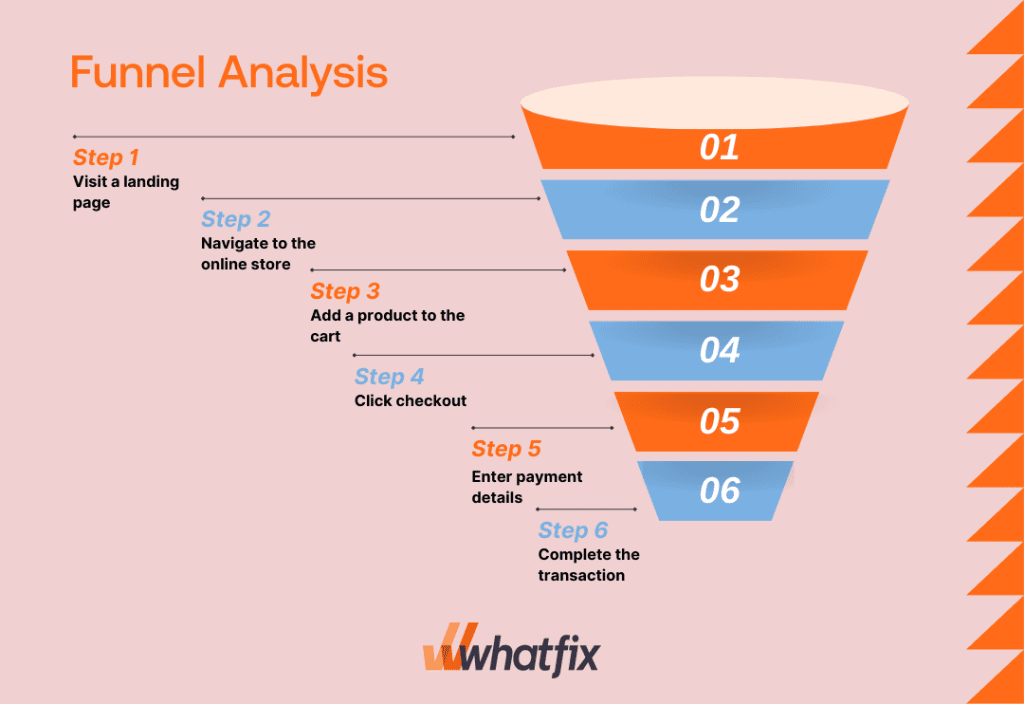
Imagine your website as a journey with checkpoints.
Checkpoint 1: Visitor lands on your homepage.
Checkpoint 2: Visitor clicks on a product or service.
Checkpoint 3: Visitor shows interest by adding to cart or filling a form.
Checkpoint 4: Visitor moves to checkout or confirmation page.
Checkpoint 5: Visitor completes the action.
Not everyone reaches the last checkpoint. That is normal. But the goal is to reduce the number of people who drop off at each step.
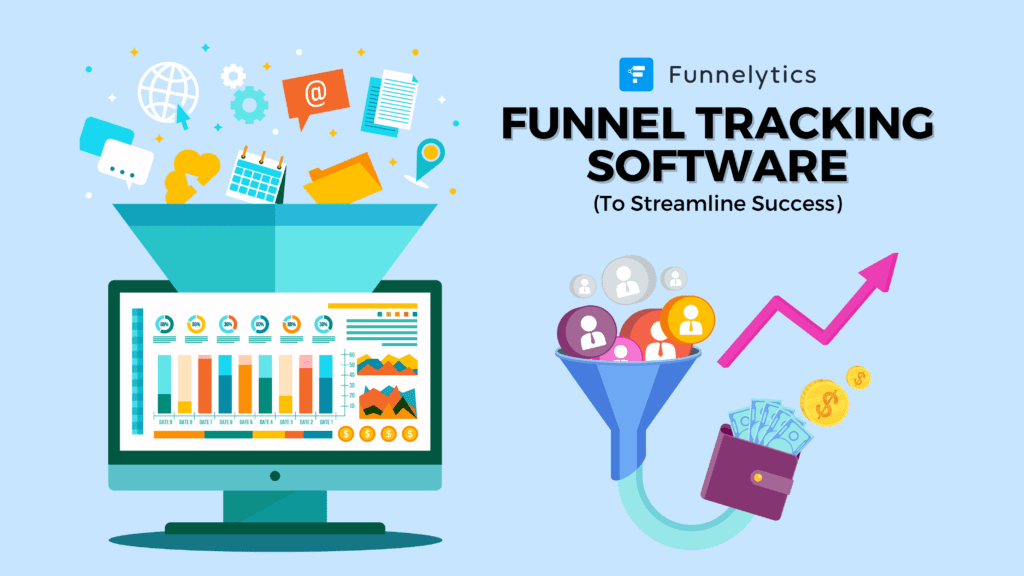
A funnel tracking tool records how many people move from one checkpoint to the next. It shows where the biggest drop happens. That is where improvement is needed.
It is that simple.
Credit: www.funnelytics.io
Why Funnel Tracking Is More Important Than Traffic
Many business owners believe that traffic is the main problem. They focus on ads, social media, and search engine rankings. But traffic alone does not guarantee success.
Let us look at a simple example.
You get 10,000 visitors per month.
Your conversion rate is 2%.
That means 200 sales.
If you increase traffic to 15,000 but your conversion rate stays at 2%, you get 300 sales.
Now imagine you keep 10,000 visitors but increase your conversion rate to 4%.
Now you get 400 sales.
Which strategy is smarter?
Improving conversions often gives faster and cheaper growth than chasing traffic.
Studies across digital industries show:
Average website conversion rates are between 2% and 4%.
Cart abandonment rates often reach 70%.
Many businesses do not track full funnel behavior.
That means most businesses have hidden opportunities inside their current traffic.
A Visual Funnel Example
Let us break down a real scenario.
3,000 Visitors
↓
1,800 View Product
↓
900 Add to Cart
↓
500 Start Checkout
↓
320 Complete Purchase
At first glance, 320 sales look good.
But look closer.
580 people added to cart but never purchased.
400 started checkout but left.
That is where money is leaking.
Without funnel tracking, you only see the 320.
With funnel tracking, you see the lost 680.
This clarity is powerful.
Learn More About Visit Here >>>
Real User Experience: A Practical Case
A small software company offered a free trial for their service. They had 6,000 monthly visitors and around 600 trial sign-ups. But only 60 users upgraded to paid plans.
They believed their product was the issue.
After installing a funnel tracking tool, they discovered something surprising. Most users dropped off during the onboarding process. The setup instructions were too long and confusing.
They simplified onboarding. They added step-by-step guidance. They removed unnecessary steps.
Within two months:
Trial sign-ups stayed the same.
Paid conversions doubled from 60 to 120 per month.
The product did not change.
The funnel improved.
Core Benefits of Using a Funnel Tracking Tool
When you use funnel tracking correctly, you gain multiple advantages.
You understand customer behavior deeply.
You find hidden friction points.
You improve user experience.
You increase conversion rates.
You reduce wasted marketing spending.
You make confident business decisions.
Instead of reacting emotionally, you respond strategically.
Common Reasons People Leave Funnels
When funnel tracking reveals a drop-off, it is often caused by simple issues.
Slow loading pages make users impatient.
Long forms create frustration.
Unexpected costs create shock.
Unclear pricing creates doubt.
Weak design reduces trust.
Poor mobile layout creates difficulty.
Users usually leave because something feels uncomfortable or confusing.
Once you identify the discomfort, you can remove it.
The Psychology Behind Funnel Optimization
People make decisions based on emotion first and logic second. If your funnel creates stress, confusion, or doubt, users will leave.
Funnel tracking helps you detect emotional breakpoints.
For example:
If most users leave after seeing shipping costs, price transparency may be lacking.
If users leave on payment page, trust signals might be weak.
If users leave early, your headline might not match their expectations.
When you understand emotional triggers, you design smoother experiences.
Advanced Funnel Tracking Strategies for Growth
Once you understand the basic funnel, you can go deeper.
You can segment users by device and discover that mobile users abandon checkout more often. This insight may lead to mobile optimization.
You can compare traffic sources and learn that email visitors convert three times higher than social media visitors.
You can analyze returning visitors versus new visitors. Returning visitors often have higher trust and better conversion rates.
You can track micro-actions like video views, scroll depth, and button clicks to measure engagement levels.
These advanced insights allow precise improvements instead of random changes.
Data-Driven Growth Example
Let us imagine an online store earning $20,000 per month with a 2.5% conversion rate.
After funnel analysis, they identify two issues:
Checkout page loads slowly.
Shipping costs appear too late in the process.
They fix both issues.
Conversion rate increases to 3.5%.
Revenue jumps from $20,000 to $28,000 per month.
That is $8,000 extra revenue from small adjustments.
This is the financial impact of precision funnel insights.
Mistakes to Avoid When Using Funnel Tracking
Do not ignore small drop-offs. Small leaks become large losses over time.
Do not track too many steps at once. Focus on your main conversion goal first.
Do not check reports once a month. Review weekly for faster improvement.
Do not blame traffic immediately. Always check funnel health first.
Success comes from consistent measurement and small improvements.
Credit: whatfix.com
The Future of Funnel Tracking
Modern funnel tracking tools are becoming smarter. Some provide automatic alerts when conversion rates drop suddenly. Others use predictive analysis to forecast user behavior.
In the future, data-driven businesses will outperform those who rely on assumptions.
Precision will win over guesswork.
Final Thoughts: From Visitors to Customers
A funnel tracking tool is not just software. It is a decision-making system.
It shows you:
Where visitors enter.
Where they hesitate.
Where they leave.
Where they convert.
When you fix the weak steps, conversions rise naturally.
Traffic brings opportunity.
Optimization captures opportunity.
Funnel tracking makes optimization possible.
If you want steady growth, higher conversions, and smarter marketing decisions, mastering funnel tracking is one of the best investments you can make in your business journey.